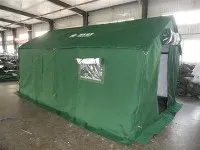
In field operations, emergency rescue and military operations, cooking tents provide a relatively stable cooking space for people. However, if used improperly, it will not only affect the cooking efficiency but also bring safety risks. The following is an introduction to the use of cooking tents from several aspects.
1. Link de construção: Ligue uma boa base para a segurança
(1) Seleção do local
The location for setting up the cooking tent is crucial. First, avoid low-lying areas to prevent water accumulation during rainy days, which could flood the tent. Additionally, stay away from dangerous areas such as cliffs, large trees, and utility poles to avoid accidents like falling rocks, broken branches, or electric shocks caused by severe weather. Choose a flat, open area with good drenagem, como pastagens ou terrenos duros . se você estiver construindo em uma inclinação, nivione o solo para garantir que a barraca fique com segurança .
(2) padronização
Siga as instruções da montagem da barraca meticulosamente . Ao montar a estrutura da tenda, verifique se todos os componentes estão conectados com segurança para evitar qualquer frouxidão . As estacas de terra da tenda devem ser firmemente acionadas, e a tenda de que a barraca deve ser resistente ao vento deve ser uma das manchas que devem ser resistentes ao vento {}}}}}}} Graus com o solo, para melhorar a resistência do vento da tenda . após a montagem, inspecione cuidadosamente a estrutura geral da tenda para garantir que nenhuma parte esteja ausente ou danificada .
2. Use Processo: respeitar estritamente os resultados de segurança
(1) Gerenciamento de ventilação
When cooking inside a cooking tent, a significant amount of smoke and carbon monoxide is produced, making good ventilation essential. Ventilation ports should be installed on the top and sides of the tent, and these ports must remain open to facilitate air circulation and promptly expel harmful gases. If using a gas stove, ensure smooth ventilation to prevent gas leaks from accumulating, which could lead to explosions ou incidentes de envenenamento . em condições de ventilação ruins, os fãs de exaustão podem ser usados para ajudar na ventilação .
(2) Segurança contra incêndio
When using an open flame for cooking inside a tent, you must remain highly vigilant. Place the stove on a stable surface, away from the tent walls and flammable items. Set up fireproof mats around the stove to prevent sparks from igniting the tent. During cooking, do not leave the stove unattended and monitor the fire and cooking conditions at all Tempos . Após o uso, feche imediatamente a válvula do fogão para garantir que o fogo seja completamente extinto .
(3) Uso de equipamento elétrico
If electrical appliances such as lighting fixtures and electric ovens are used inside the cooking tent, choose products that meet safety standards and connect them to the power supply correctly. Avoid using aged or damaged wires and sockets to prevent short circuits and leakage accidents. The installation and use of electrical equipment should follow relevant operating procedures, and it is strictly prohibited to privately pull or connect Fios acasamente . Além disso, a colocação de equipamentos elétricos deve ser razoavelmente organizada para evitar danos causados por colisões ou acidentes de segurança .
(4) Gerenciamento de alimentos e utensílios
Arrange food ingredients and cooking utensils properly to keep the tent clean and orderly. Store food ingredients separately to avoid cross-contamination. Clean and store knives, spatulas, and other utensils after use to prevent accidental injuries. Regularly clean the garbage in the tent to keep the environment clean and reduce the breeding of mosquitos .
3. Manutenção: estender a vida útil do serviço
(1) Inspeção regular
Conduct regular comprehensive inspections of the cooking tent, including its structure, fabric, vents, zippers, and other components. Check for any damage, leaks, or signs of aging, and promptly identify and address any issues. Inspect the tent's support frame for deformation, looseness, or rust, and repair or replace it if necessary.
(2) Cuidado limpo
Após cada uso, limpe imediatamente o óleo e os detritos dentro da barraca . use um limpador suave e um pano macio para limpar o tecido, evitando produtos químicos agressivos para evitar danos . Limpe regularmente e à prova de ferrugem das tendas e do Windbreakers para garantir que elas permaneçam em boas condições.}}}} umidade .
(3) armazenamento correto
Ao armazenar a barraca de cozinha, dobre e embale-a corretamente . Evite a seqüência excessiva ou dobrando a barraca para evitar danos ao tecido e à estrutura . armazenar a tenda em um local seco e ventilado longe da luz solar direta e fontes de calor para prolongar sua vida útil.}}}}
4. manuseio de emergência: lidando com emergências
(1) Resposta de incêndio
Se ocorrer um incêndio na barraca de culinária, você deve usar imediatamente um extintor de incêndio ou um cobertor de incêndio para apagar o fogo . se o fogo for muito grande para controlar, você deve organizar rapidamente as pessoas para evacuar a tenda e chamar o alarme de incêndio . no processo de evacuação, você deve manter a calma e a calma e a crowding e o trama.} no processo, »21 .} {1} no processo,»
(2) Resposta ao mau tempo
Em caso de mau tempo, como vento forte, chuva forte ou tempestade de neve, é necessário fortalecer as medidas de fixação da barraca no tempo . aumentam o número de pregos moídos e apertar a corda à prova de vento para garantir a estabilidade da tenda . se o tempo estiver muito ruim para ameaçar a segurança {considerar um lugar seguro.}
The use of cooking tents is crucial for ensuring the dietary safety and health of personnel, and it is essential to strictly follow all usage guidelines. From setup to use, maintenance, and emergency response, every step must be carefully managed. By using them scientifically and maintaining them meticulously, the full potential of cooking tents can be realized, providing robust support for field operations and emergency resgate .